Report
Como 1907
Bought for eight hundred and fifty thousand euros by the richest men in Indonesia, the Lombard club went from the fourth division to Serie A in five years. Three weeks after its return to the elite, one of the two brother-owners died.
On 4 April 2019, two Indonesian brothers — Robert Budi Hartono and Michael Bambang Hartono — bought an Italian football club for the sum of eight hundred and fifty thousand euros. The club was called Como 1907. It was then playing in Serie D, that is, the fourth division of Italian football. It had just come out of two consecutive bankruptcies, in 2004 and 2016, and nobody in European football paid it the slightest attention.
Five years later, in May 2024, Como 1907 was promoted to Serie A for the first time in twenty-one years. On 24 August 2025, it hosted Lazio, before a packed Stadio Sinigaglia, on the shores of Lake Como. Seven months later, on 19 March 2026, in Como, Michael Bambang Hartono died at the age of eighty-six, two years after seeing his club return to the Italian elite.
The story of the Hartono Como covers exactly the time it took for a sporting project to bear fruit, and not a season more. It is that extreme compression — between the purchase and the death — that makes the case unusual, and that is what this report examines.
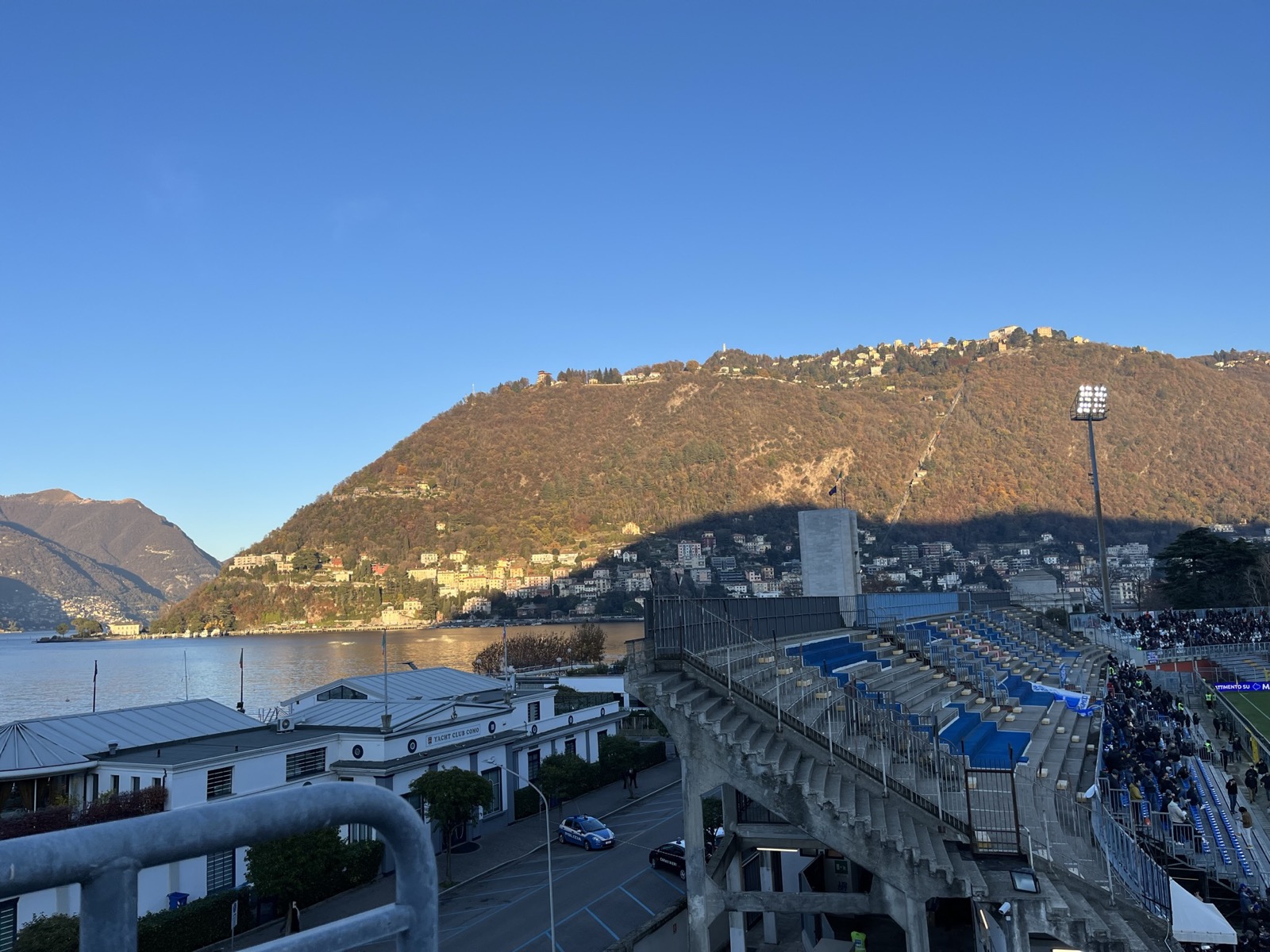
The Stadio Giuseppe Sinigaglia, with Lake Como in the background, in December 2022. Como had just been promoted to Serie B, the second stage of a four-year rise.
The club, the lake, the history
Como 1907 was founded on 25 May 1907, in a café on Via Cinque Giornate, by a committee of local notables. It is one of the oldest Italian clubs. For a century, it oscillated between Serie A, Serie B and the lower divisions, without ever establishing itself durably among the great. Its best collective memory is probably the 1930-31 season, when the team won promotion without losing a single match, scoring ninety goals in thirty-two games.
The Stadio Giuseppe Sinigaglia was inaugurated in July 1927, and Como moved in the following season. The stadium is famous for a reason that has nothing to do with its architecture: it sits on the western shore of Lake Como, and some stands look directly onto the water. When the weather is clear, one can see the Alps above the lake from the terraces. It is one of the most beautiful stadiums in Italy in the literal sense of the word. Its capacity, however, is small: thirteen thousand six hundred and two seats.
In 2004, the club was declared bankrupt and excluded from professional football. It started over from Serie D, progressed back up, and went bankrupt again in 2016. Refounded in 2017 under the name Como 1907 S.r.l., it survived with great difficulty in the fourth division. It was in this state that the Hartonos bought it.
The Djarum brothers
To understand the operation, one has to understand who the buyers were. Robert Budi Hartono and Michael Bambang Hartono ran the Djarum Group, an Indonesian conglomerate founded by their father in the 1950s around a cigarette factory in Kudus, Java. At the time of the Como purchase, Djarum was one of the three largest producers of kretek cigarettes in Indonesia. The family also controls Bank Central Asia (BCA), one of the country's largest private banks, and an industrial and real estate portfolio that makes it, according to Forbes rankings, the wealthiest family in Indonesia and one of the seventy wealthiest in the world. The combined fortune of the two brothers was estimated at more than fifty billion dollars.
For men of this financial scale, buying an Italian Serie D club at eight hundred and fifty thousand euros was not an investment. It was a personal project. In their own statements to the Indonesian press, the two brothers said they wanted to acquire a historic European club without paying an extravagant price, and Como — old, bankrupt, but in Como, on the lake — had the advantage of being both affordable and iconic. They bought it through a structure called SENT Entertainment, based in Singapore.
Key figures
The rise
From 2019 on, the club followed a strictly ascending trajectory. Promotion to Serie C arrived in 2020, to Serie B in 2021, and finally to Serie A in May 2024 — a year after a famous Spaniard joined the project.
In August 2022, Cesc Fàbregas, former playmaker of the Spanish team that won the 2010 World Cup, signed for Como as a player and simultaneously became a minority shareholder. A few weeks later, Thierry Henry also joined the capital as a minority shareholder. Dennis Wise, former Chelsea captain, has held the position of chief executive since 2021. The casting was deliberately spectacular: it served to give the project a European football credibility that the Hartono brothers alone could not provide.
Fàbregas played until the end of 2023, took over the team in November as interim head coach, briefly returned to assistant in December under Osian Roberts, then became official head coach on 31 January 2025. He directed Como during the 2024-25 Serie A season, its first in the top flight — the club finished tenth out of twenty, a performance widely celebrated as a success for a promoted side.
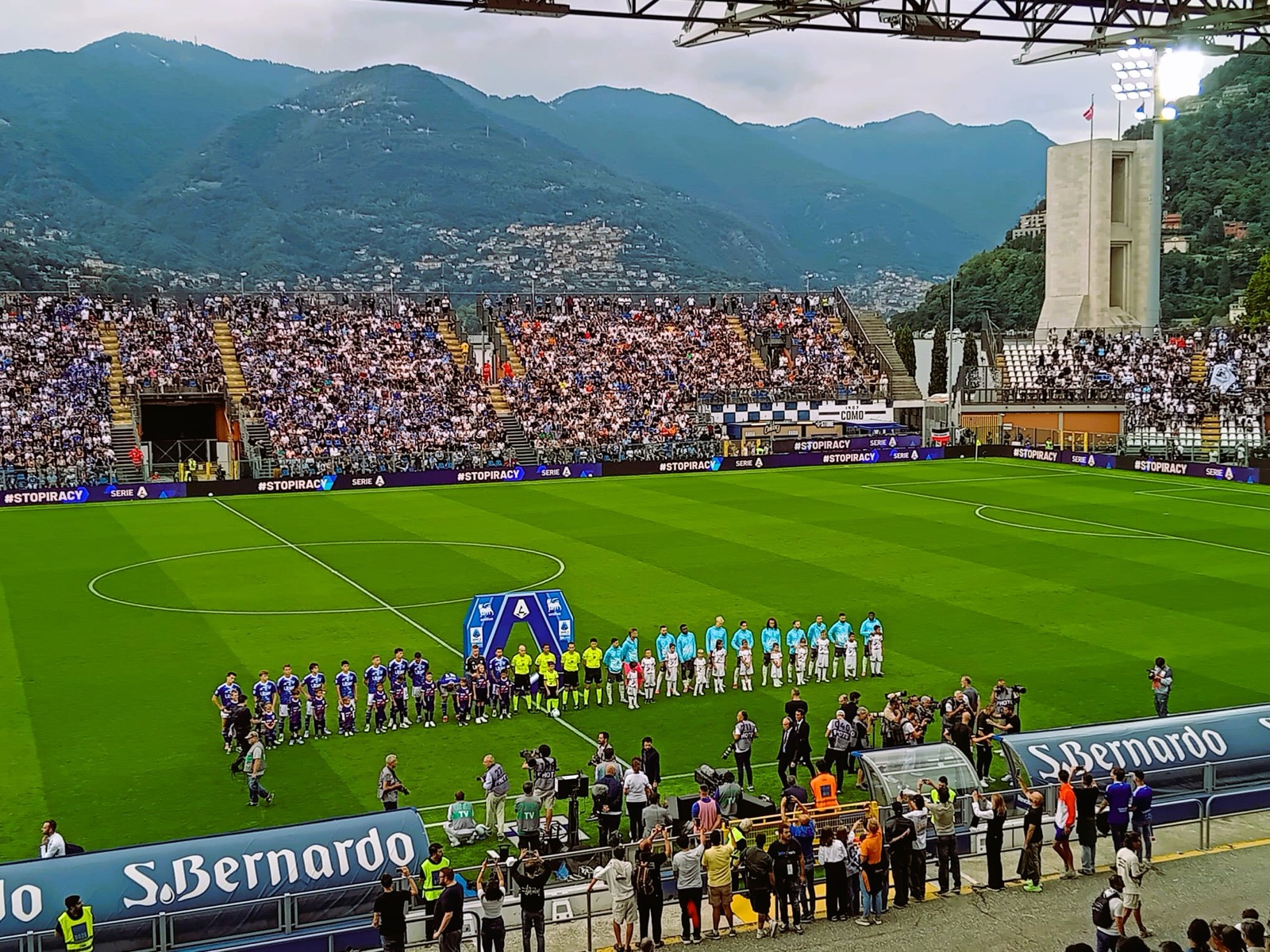
Como 1907 against Lazio, Serie A, 24 August 2025. The club's first season in the Italian elite under the direction of Cesc Fàbregas, six years after being bought for eight hundred and fifty thousand euros.
2025 · Fra Casa — Wikimedia Commons · CC BY 4.0
March 2026
On 19 March 2026, in Como, Michael Bambang Hartono died at the age of eighty-six. He had suffered for several years from chronic pulmonary disease and had survived a heart attack. The club published a statement the same day expressing its sadness and recalling his role in the transformation of the past seven years. Robert Budi Hartono, the younger brother — eighty-five years old — remained the only one of the two founders of the project who could now embody it.
This event has a reach that goes beyond sentiment. It raises the structural question that always follows the death of an owner of a personal sporting project: does the next generation pick up the torch, and with what intensity? The Hartono brothers have heirs. Those heirs already manage branches of the Djarum Group. But Como was not the family business — it was the business of the two brothers. Without one of them, the club inherits half the attention it had, and the other half depends on the decision of the descendants.
Buying a club is nothing. Taking it up is rare. Making it last after the departure of the one who bought it — that almost never happens.
Seven years, two bankruptcies, one elite
- 1907
Founded in Como
Como Foot-Ball Club is founded on 25 May by a committee of notables gathered in a café on Via Cinque Giornate.
- 2004
First bankruptcy
The club is declared bankrupt and excluded from professional football. Starts over from Serie D.
- 2016-17
Second bankruptcy and refoundation
Another bankruptcy, another refoundation under the name Como 1907 S.r.l. The club is in the fourth division.
- April 2019
Hartono brothers buy the club
Robert Budi and Michael Bambang Hartono, through SENT Entertainment, buy the club for eight hundred and fifty thousand euros.
- 2020-21
Promotion to Serie C, then Serie B
First step: return to the third division. Second step: back in Serie B for the first time since 2003.
- August 2022
Fàbregas and Henry arrive
Cesc Fàbregas becomes a player and minority shareholder. Thierry Henry also enters the capital. Dennis Wise has been CEO since 2021.
- May 2024
Promotion to Serie A
First season in the Italian elite since 2003. Twenty-one years of waiting.
- March 2026
Death of Michael Hartono
Michael Bambang Hartono dies in Como, at the age of eighty-six. Robert Budi remains alone at the head of the family project.
What the model tells us
The Como 1907 case holds a particular place in the new cartography of private capital in European football. It is neither a multi-club arrangement à la 777 Partners, nor a statistical analysis project à la Tony Bloom, nor a two-headed joint operation à la Paris FC. It is, almost uniquely, a passion of individuals who could afford it. The purchase price — eight hundred and fifty thousand euros — was derisory on the scale of the Hartono portfolio. Everything that followed came from a single fact: they wanted to do it, they had the means, they did not need to convince anyone.
This absence of external constraints — no investors to reassure, no quarterly targets, no return-on-investment plan — probably explains the speed of the trajectory. The Hartonos did not have to justify the losses of the early years, because nobody outside them was paying anything. When Cesc Fàbregas was contacted, he did not have to go through a hiring committee: it was a direct call, and he accepted in part because he sensed the project was sincere.
The fragility of the model is that same thing. A project built on the personal will of two individuals is exposed to the disappearance of one of those individuals. That is what has just happened. Robert Budi Hartono can continue alone, and he will certainly do so for a while. But the question that now arises for Como is: what becomes of a club bought out of passion when the original passion goes out? The family portfolio can maintain the club; it can hardly maintain the momentum.
For other European clubs watching the case, the transferable lesson is not "you need a passionate billionaire". It is rather "the quality of a sporting project depends, more than one thinks, on the exact nature of the link between owner and club." A fund buys assets; a family billionaire buys a personal narrative; the two produce different results. The Hartono Como is the reminder that this distinction, which we tend to erase in financial analysis, makes all the difference in the trajectory of a club.